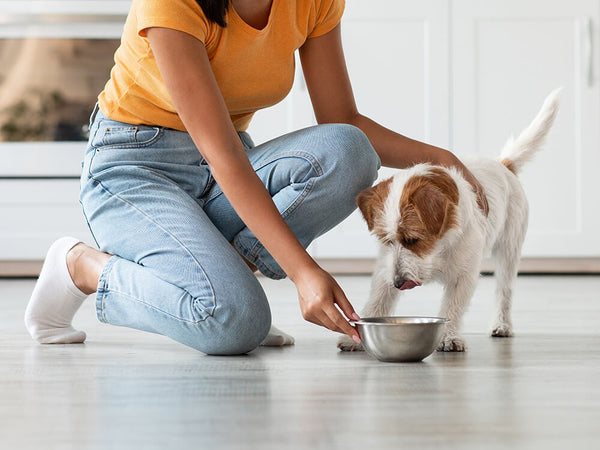
Preparing for a Puppy or Kitten
Nothing seems to pull at the heart strings as powerfully as a puppy or kitten. That
adorable little bundle of fur, however, comes with a BIG bundle of responsibilities.
Though the first six months are the most intense, the responsibility of guardianship
lasts for the lifetime of your pet – 15 to 20 years. Are you prepared? Here are
some helpful tips for starting off on the right “paw” with your new best friend
and a list of essentials to have on hand.
Selecting “The One”
Researching breed characteristics is a must. Choosing a puppy or kitten to match
your lifestyle is critical for the long-term success of your relationship. If you
are an apartment dweller without much time for long romps in the park, a cat might
be a good choice, or a breed of dog that is small or needs less exercise. Perhaps
a Yorkshire Terrier or Pug would be well suited, but breeds such as Beagles or Australian
Shepard’s would not. No matter how much you fall in love with a particular puppy,
if his heritage and breed characteristics are not right for your lifestyle - it’s
best to keep looking.
Visit shows and local breeders to get a better feel for the breed you are interested
in. Consider contacting local rescue organizations if you are set on a particular
breed, or the local shelter. Litters of puppies and kittens are often left at shelters
in need of “forever” homes. Cats differ, too, from breed to breed – so do the same
homework you would if choosing a dog.
Accommodations
Once you have chosen your new companion – or rather, she has chosen you; prepare
her new home in advance. She’ll need places of comfort and safety. A
cozy bed of her own is a must, even if she’ll be sharing yours some of the time.
For puppies, a large crate or corral is essential for any times she will be unsupervised.
Better yet is a room with hard floors such as a kitchen that can be gated off with
baby gates. Learn about proper crate and house training before you bring her home.
If you start out by leaving her for too long in a crate or without a proper set-up,
she may learn to fear confinement.
For kittens, provide a cat tree or hidey hole to retreat to for naps in safety.
Some cats prefer a high perch, some prefer a cozy “cave”, so you may need to offer
both until you learn your kitten’s preferences. It is usually best to start your
kitten out with just one room to explore and become accustomed to. Once he has settled
in for a day or two you can gradually expand his territory.
For any puppy or kitten, traveling and acclimating to a new home is quite stressful.
You can help immensely in setting the stage for a smooth transition for your companion
by supporting them with Flower Essences, Pheromone products and other calming remedies:
Spirit Essences New Beginnings or
Pet Essences New Home / Group Living are designed to help support your little
companion’s emotional state as she settles in. These can be added to the water or
massaged into the ears or paws.
Calming pheromones are natural “scents” produced by nursing mother dogs and cats
that soothe and calm puppies and kittens.
Phero-Soothe spray can be used in the carrier or crate and car prior to travel,
as well as spraying directly on bedding and around the house to help reduce stress.
Nutri-Vet Pet-Ease Pheromones can be plugged into any outlet for continual release
of pheromones in the room where your new companion will spend the most time.
Routine, Routine, Routine
Kittens and puppies thrive on routine – and this is especially important to housetraining
a puppy. Feeding at regular intervals along with taking your puppy out on a schedule
is THE BEST way to avoid a long, drawn-out housetraining process. If you follow
a routine from day one, you’ll have him trained far more quickly and with fewer
“mistakes”. Read a good book on training such as
The Other End of The Leash or
Don’t Shoot the Dog.
Cats are creatures of habit, so set up the right habits from the start. They like
life to be predictable, so go slowly when introducing him to his new environment
and housemates, keeping things as calm as possible. Kittens typically do not need
much training to use a litter box. No matter what
litter you ultimately intend to use, it may be wise to start with some of the
same litter your kitten was accustomed to in his previous environment and make a
gradual transition. For the first day or two, it can be helpful to place the kitten
in the box periodically and gently help him paw a bit of the litter so he gets the
idea.
Separation anxiety is normal for many animals and can be managed and curtailed by
working slowly; gradually getting your pet accustomed to being alone. Start with
short departures – as little as 10 or 15 minutes, until you see how your puppy or
kitten reacts. Gradually increase the time you are away until your little friend
can be alone for up to several hours at a time. Again, using calming remedies such
as
HomeoPet Anxiety and/or
Lonliness / Home Alone Flower Essence can help support your pet through the
learning process. See the article about
Separation Anxiety in our Newsletter Archives.
Puppies, especially, should not be left for an 8 hour work day as they are pack
animals and do not like to be alone for such long stretches – not to mention there
is no way they can hold their bladders that long. Consider a dog walking service,
a friendly neighbor, doggy daycare or a combination of solutions. When he is left
alone – make sure he has an “approved area” for elimination with puppy pads or newspaper.
Do not crate him for more than an hour or two until he is older. A general rule
of thumb is that he can hold it for as many hours as his age in months – so a 2
month old can go for two hours at the most between potty breaks, a 3 month old 3
hours, etc.
Healthy Food & Treats
Start your companion out with a top quality diet to support his growth and development
and build a strong immune system. The fresher the foods we eat, the healthier we
are and the same holds true for our four-legged friends. A raw diet is the closest
to your puppy or kittens natural instincts. If you are not prepared to try raw,
easy to prepare
Dehydrated,
Home Prepared, or
Freeze Dried foods are the next best thing. Using these along with a
good quality canned food for kittens and
canned or dry for puppies will provide all their growing systems need. It is
not necessary to feed a bag or can of food labeled “puppy” or “kitten” as long as
you are feeding a top quality diet. Please see
What You Need to Know About Your Pet’s Food for more information.
Feed your little charges frequently in the beginning – 3 to 4 times per day. At
5 to 6 months you can slowly transition to 2 meals per day by gradually reducing
the amount of the mid-day meal and increasing breakfast and dinner a bit. Keep in
mind that at around 6 months their growth process will begin to slow down, so watch
your companion’s waistline and start to slowly reduce the amount you feed if need
be. Overfeeding your puppy or kitten can set them up for health problems once they
mature such as joint issues and obesity. Puppies and kittens should be trim and
fit, not chubby and round.
Do not leave food out free-choice unless you cannot find a way to provide a mid-day
meal when you are at work. Free-choice feeding is a set-up for unhealthy eating
and elimination habits. If you must leave food out when your kitten or puppy is
younger, be sure to eliminate free feeding once he is old enough to transition to
2 meals per day. Not only does free-choice feeding frequently lead to overweight
pets, it is also a strain on their developing immune and digestive systems.
Vitamins & Supplements for Optimal Health
Diet is the foundation of any animal's health - but what can you do in addition
to a healthy diet to insure your puppy's or kitten's optimal development and strong
immune system? Provide supplements tailored to her needs:
Colostrum
Kittens and puppies are more vulnerable than mature animals to parasites and disease
because their immune systems are still developing. In addition, they are under a
good deal of stress as they leave the safety and familiarity of their mothers and
try to learn the ways of living with a human family. Most holistic veterinarians
highly recommend supplementing all puppies and kittens diets with
colostrum to help boost their immature immune system for at least a month or
two after weaning.
Digestive Enzymes
To support the proper digestion of foods nature wisely endowed every vegetable,
fruit and animal food source with enzymes that help break it down. These enzymes
are destroyed, however, by heat and processing. Every dog or cat that is eating
a processed food (anything other than raw or lightly cooked) diet should receive
digestive enzymes with each meal. This will not only improve digestion and the
assimilation of nutrients, but it will also help protect against the development
of allergies and immune disorders such as IBD (Inflammatory Bowel Disease) which
can be caused by poor digestion.
Essential Fatty Acids (EFAs)
EFAs are required in the diet – they cannot be produced by the body (hence the “essential”
in the name). These essential fatty acids are necessary for proper formation of
cell membranes, are precursors for prostaglandins (hormones), aid in proper cardiovascular
function and nourish the skin and coat as well as the lining of the digestive tract.
They support brain and eye development in growing kittens and puppies.
Fish oils are the best source of EFAs and most dogs and cats love the taste
as well.
Multi-Vitamin
Many of us take a
daily multivitamin to insure we receive a basic amount of important vitamins
and minerals. Even the best diet for our dogs and cats of fresh raw foods can be
lacking in some essential vitamins and minerals. Much of the vitamins and minerals
in packaged dog and cat foods are destroyed during the processing. Even when sprayed
back onto the food after processing, the vitamins and minerals break down rapidly
when exposed to light and air. The first bowl of kibble from a bag may contain most
of what the label claims, but each time the bag or container is opened, the nutrients
are affected.
Think of a multi-vitamin supplement as health insurance: Insuring the body has everything
it needs for proper cell function and growth will keep your little friend’s health
at its peak, possibly reducing your veterinarian visits and costs in the long run.
If adding 3 separate supplements to your pet’s diet sounds a bit daunting, try our
Only Natural Pet Super Daily Vitamins and Enzymes Skin and Coat Formula. This
combination supplement includes flax meal to provide the essential fatty acid component.
Vaccinations & Deworming
The controversy surrounding vaccinations for kittens and puppies is an important
issue for consideration by every dog or cat guardian. Vaccinations can help prevent
serious illnesses, but they deeply stress the immune system of any animal and can
cause adverse reactions and contribute to long term chronic diseases. When it comes
to vaccinations; the fewer that are necessary the better for the animal’s long-term
health. The decision about vaccinations is very individual and should be guided
by your own research on the subject before you go to the veterinarian.
Puppies and kittens should not be vaccinated until at least 10 - 12 weeks of age.
Their developing immune systems are especially vulnerable to the stress of vaccines.
Individual vaccines are best if available, and vaccinate at least three weeks apart
if possible. Until 12 weeks of age keep your companion safe by avoiding exposure
to public areas such as parks and pet stores. Keep them close to home and only expose
them to animals you know are healthy. DO NOT vaccinate a sick animal – if your puppy
or kitten is not in perfect health, delay the vaccines until he is.
The core vaccines that most holistic veterinarians will recommend include, for kittens:
feline panleukopenia and rabies – as it is required by law in most states, even
for indoor cats. For puppies: parvo, distemper and rabies. Again, research this
issue and understand the risks for any non-core vaccinations your veterinarian suggests.
If your companion’s risk of exposure is small, then it may be wise to avoid non-core
vaccines. Immediately following vaccination, consider administering a remedy such
as
PediGREEN’s Post Vaccination Pain to help ease the stress on your little fury
friend. If your pet has an
adverse reaction,
Thuja can be helpful. It is the primary vaccinosis (adverse reaction to a
vaccine) remedy for all species. If you must have your pet vaccinated, it is a
good idea to give a dose of
Thuja 30C within two hours of the injection. It is also helpful in case of
immediate vaccine reactions such as vomiting or diarrhea occurring within a few
hours of the shot.
For more information about vaccination issues please see the article
The Truth About Pet Vaccinations in our Newsletter Archives and the article
on
Vaccination by one of our consulting veterinarians, Dr. Jean Hofve. In addition,
we encourage you to support the
Rabies Challenge Fund for further research into the area of vaccines and regulations.
Most puppies and kittens will have worms during their first weeks of life no matter
how healthy their mothers are and how clean the environment. Regardless of whether
or not your companion was wormed prior to your taking over her care, have a stool
sample analyzed by your veterinarian during your first visit. Prescription dewormers
from your veterinarian are gentler, safer and more effective than over-the-counter
dewormers available at pet stores.
Herbal and homeopathic dewormers are available as well, but should be followed
up with another stool sample to insure that all infestations are cleared.
Grooming / Flea Control
Grooming is not only about maintaining a healthy coat, but it is also a time for
bonding with your four-legged friend. Choose a
comb or brush suitable to your kitten or puppy’s coat. Make grooming enjoyable
by offering frequent treats during the process. Keeping little
nails trimmed frequently can help avoid scratched legs and furniture and will
keep your companion more comfortable as well. Grooming and handling your little
one prepares them for veterinary visits and examinations.
One of the risks of owning a bundle of fur is that it can attract unwanted visitors
to your house – such as fleas. Get a
good flea comb to check for fleas if you see your kitten or puppy scratching.
Be prepared by keeping some
All-In-One Flea Remedy on hand. If fleas are a problem in your area, it is wise
to treat the animal’s bedding and favorite resting spots with the powder as a preventative
measure. The
All-in-One powder is safe for use on puppies and kittens as young as 6 weeks.
If you will be walking your puppy anywhere other than your own yard, consider using
Herbal Defense Spray to avoid bringing home fleas from the park or a neighbor’s
yard.
Chewing & Scratching
There is no way around it – puppies must chew and kittens must scratch; and even
kittens will need to chew when teething. Like housetraining or any other learning
experience the better you set your new friend up for success, the better the chance
for a healthy and enduring relationship between the two of you. Many a puppy and
kitten are given up for adoption due to chewing or scratching inappropriate items
– like shoes, carpet and furniture.
Remember that it is natural behavior – so don’t punish them for chewing or scratching,
just direct the behavior to appropriate objects and remove inappropriate ones. For
puppies, anything within reach is fair game – they just don’t know that your favorite
Italian stilettos or the TV remote aren’t puppy toys. It is up to you to puppy-proof
and keep things out of reach. Along with keeping inappropriate items out of reach,
be sure to keep plenty of
appropriate toys and
chews on hand and within reach. Be prepared with a variety of chews that are
appropriately sized so you can find out what her favorites are. See
Choosing a Chew on the Only Natural Pet Blog to explore some options. Stuffed
Kong toys or an
Orka Jack are favorites for those times your pup will be left unsupervised but
many need a “pacifier”. Stuff the
Kong with some
Justin's Organic
Peanut Butter and some
small treats - he is likely to enjoy this treat so much he may not even notice
you’re gone. To make the game last longer, put the stuffed Kong in the freezer for
awhile before giving it to your puppy.
Kittens need to scratch, stretch and climb – it’s in their nature. Again, don’t
punish natural behavior – direct it to appropriate areas. Provide at least one high
scratching post such as the
Ultimate Scratching Post, that your kitten will be able to stretch on even when
full grown. It is a good idea to provide more than one scratchable surface. The
SmartCat Scratching Ramp is easy to move around the house wherever your kitten
seems to be attracted to scratching. Placing one behind the sofa or other tempting
furniture sets your kitten up to avoid mistakes. Spray furniture with
Herbal Scratch Spray or apply
Sticky Paws BEFORE your kitten comes home so she is never attracted to those
surfaces from the day she arrives. If you don’t want her sleeping on the backs of
your furniture, you’ll need to provide a cat tree or other high ledge she can call
her own.
Toys and Exercise
Don’t forget the fun stuff! Kittens and puppies are like kids, they need to keep
exploring and learning as they grow. The more you challenge their little minds,
the smarter they get. Toys and games are their best learning experiences, so get
them a variety of things to satisfy their needs.
Kittens need chewy toys for teething like the
Fishy Fun Toys or
Catnip Chew Ring. They also need something to chase such as the
Kitty Lure Chaser or
Catnip Pounce and Play. The
Peek and Play Toy Box is a big favorite for growing kittens.
Puppies love a good game of
tug o’ war, but don’t forget to let her win occasionally. Another favorite is
something cuddly for naps yet floppy for those times he feels ferocious and wants
to shake his prey back and forth and unleash the terrible terrier within – try a
Simply Fido Organic Plush Toy or
Flop-Ability Activation Toy.
Remember to get a
collar and
leash for walks in the great outdoors. Even kittens can be allowed to explore
safely with a secure
harness and leash. Fresh air is a necessity of life even for indoor kittens
and cats.
Puppies and kittens are notoriously accident prone, so it may be prudent to invest
in a good
first aid kit and keep the
PediGreen First Years homeopathic kit on hand. Choose your veterinarian
with care – don’t just go to the closest clinic. Ask at the local shelters, at shows
and dog parks to find out who the best vets are in your area. You can check the
American Holistic Veterinary
Medical Association’s Referral Page for a list of holistically trained veterinarians
near you.