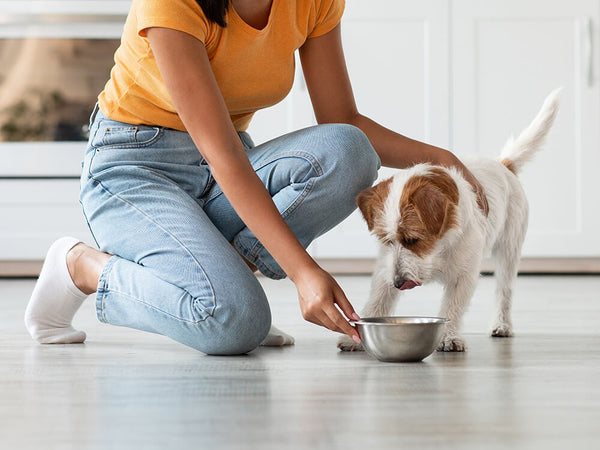
Weight Management for Dogs and Cats
Obesity in dogs and cats is one of the most common problems
seen by veterinarians today. Overweight companion animals are at a higher risk
for a number of health problems including diabetes, joint stiffness and
arthritis, non-allergenic skin disorders, lower urinary tract issues, fatty
liver disease (hepatic lipidosis) and shortened life span. For these
reasons, if you are letting your pet become overweight with excessive food or
treats, you
may be killing your companion with "kindness."
How to tell if your dog or cat is overweight:
- Feel their ribs. You should be able to feel each
individual rib with a slight layer of fat over them. If you have to work at
feeling those ribs or can’t feel them at all, it’s time for a weight-loss
plan. If you can see the ribs, your companion may be too thin.
- Feel the area over the base of your dog or cat’s tail. A slight layer of fat
over the bones is good. If the bones are prominent, the animal is too
thin. If the bones are hard to find, the animal is overweight.
- Feel other bony areas such as the spine, shoulders and hips. Again, a slight
layer of fat is what you are looking for. If the bones are visible, the animal
may be too thin. If there is extra padding, then your companion is
overweight.
-
Look at your companion from above. You should see a waist behind the rib cage of a
cat or dog in the healthy weight range. In the photo below our friends Honda
and Jack have modeled this view. Jack, on the left, is in ideal condition
and shows a nice waist. Honda, his buddy on the right, is overweight - his
waist is missing.
-
Finally, look at your companion from the side. The waist should again be
visible as a "tuck" behind the rib cage area. If the animal’s waist is the
same as his chest, he or she is definitely overweight. This side view will vary
from breed to breed, with greyhounds and similarly built dogs looking thin
compared to others, as they have rather deep chests and smaller waists.

If your veterinarian has ruled out any health conditions
that are causing your friend’s extra weight gain, then a weight management
program is in order. As with humans, crash diets are not healthy. Aim for a gradual
weight loss of .5 - 2% of body weight per week. If you can, weigh your pet
weekly.
Weight loss and control involve:
- Feeding the proper diet (lower carbohydrates)
- Providing proper portions based on pet's age, size, and activity level
- Feeding meals rather than "free feeding"
- Controlling quantity and quality of treats
What to Feed
Weight loss programs for animals are the same as those for
people – eat less and exercise more. Specially formulated weight loss diets are
not generally necessary. High quality nutrition is the best way to help your
friend lose her extra pounds. Most commercial dry foods are high in carbohydrates, which can
contribute to weight gain, especially in cats. Cats do not produce as much of
the enzyme, amylase, that digests carbohydrates as people and dogs do, so grains
and other carbohydrates are more difficult for cats to break down and digest
properly. Cats need meat as the main portion of their diet. Please see
our article, "What You Need to Know About Your Pet’s Food," for
additional information on appropriate diets.
Many overweight animals slim down
nicely when transitioned to a raw food diet, but even a high quality kibble is
fine as long as you feed the appropriate quantity. The newer grain-free diets may be appropriate, but keep in
mind that you will need to feed less of this type of food. If you know you will
not be able to reduce the amount of food you are giving your companion without
feeling overwhelming guilt, then try a
food formulated
for weight control. Adding
digestive enzymes
to each meal can help break down the food and make the nutrients more available
for absorption.
How Much to Feed
Pet food labels are not the best way to determine the
proper amount to feed your companion. The recommended portions on pet food
labels are a very rough guideline and are based on the manufacturer’s estimate
of what an "average" cat or dog may be. ach animal is an individual and will
have different activity levels and metabolism than others – even those in the same
household. In our house we have a 75 pound lab mix and a 56 pound border collie
mix, and despite the 20 lb. difference in size, they still eat exactly the same portion
at every meal. The border collie mix is much more active and spends most of the
day outside, whereas the lab mix likes the sofa. They also need less food in the
winter than in the summer when they are more active.
Cats and small dogs need very small portions – sometimes
less than an ounce per meal. It may look like hardly any food to you, but it
will be plenty to meet your companion’s needs. If you are monitoring their weight
regularly, you will notice if they is losing too much too fast, and you can adjust the
amount you feed slightly.
Meal Schedule
Leaving food available all the time (known as free feeding) contributes to obesity
and also a number of other health problems. It is a myth that dogs and cats
will regulate their own weight if food is left out. Some may, others will not,
but they will all suffer from an over-stimulated digestive system and stressed
immune system over time. Cats and dogs are hunters – they eat and then rest. They do not snack. If your companion is used to eating at will, cut back to
three
or four small meals a day, and then down to two. Two meals a day is fine for adult
animals. Puppies and kittens should be fed at least three times a day during their
greatest growth period in the first 4 to 6 months.
Exercise
Exercise provides much more than just an increase in
calorie usage. It contributes to the quality of your relationship with your
companion as well as improving his mental health, cardiovascular and immune
system health and
increasing his longevity. For dogs this can be as simple as a 15 or 20 minute
walk twice a day. A trip to the local off-leash dog park can provide even more
fun and exercise.
Cats are a bit trickier to exercise, especially overweight
cats, as they tend to feel less energetic and playful. Try a wide
variety of toys – both interactive toys that you
can use to stimulate your cat, and some toys that might encourage her to play
when you are away. Catnip can help stimulate your kitty to play a bit. If she
tires or gets bored easily, then start with shorter play sessions in the
beginning and try to gradually increase the play periods. An outdoor space for
your cat can contribute to both their physical activity and mental health. Provide climbing branches or structures for strength building if possible. If
you live in an apartment – get the biggest piece of
cat
furniture you can fit in the space
available.
Treats
It is difficult for most guardians to eliminate treats entirely –
especially those guardians who are well trained (or rather who have trained
their animals well). You may have thought it was cute the first time Fido ran
to the treat cupboard and looked at you with hopeful eyes, but now it is a very
hard habit to break. The same goes for your feline friend when she meows
relentlessly until you give her a tidbit. If you have rewarded your friend for
begging, he will continue to beg and learn to beg harder.
Since treats provide
enjoyment for both of you, just change the quantity and quality to meet the
weight loss program. Break the treats into smaller pieces – no larger than the
size of a pea. A taste is all that is needed to give your friend a reward or
special treat. And use high-quality all or mostly meat treats such as the
freeze-dried or dehydrated meat treats. Reduce
the amount you feed at each meal to account for the amount of treats you have fed that day.
The Reward – Happier, Healthier Companions
Once you have helped your companion reach a healthier
weight, you can slightly increase the food portion to maintain that weight. Continue to watch her closely – feeling for ribs and looking for a waist, and
weighing her if possible on a regular basis. Remember to adjust the amount you
feed to his activity level – don’t keep feeding a cup per meal in the winter if
he is inside and less active.
In the long run your pet will be happier and more active
when kept at an appropriate weight. She will be healthier and will likely live
longer as well. Weight control is well worth the time and effort for the
long-term health of your companion.